
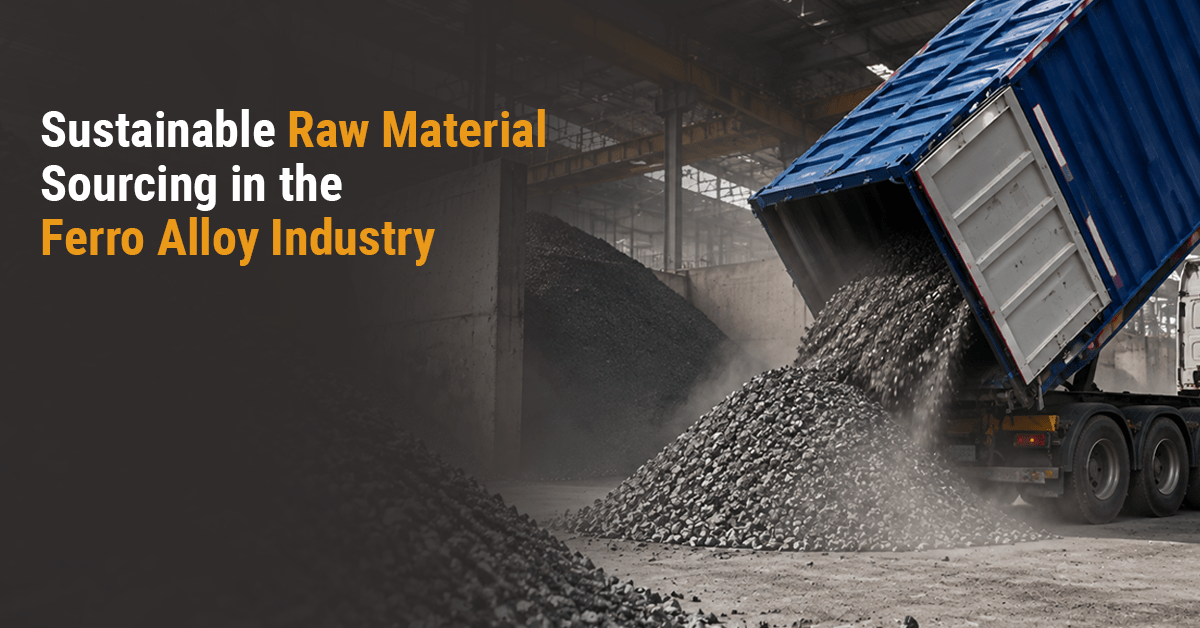
Raw materials form the foundation of ferroalloy manufacturing, making responsible procurement an important part of the ferroalloys industry. For manufacturers, sustainable sourcing involves more than securing a reliable supply of manganese ore and other essential inputs. It also involves evaluating suppliers for quality, regulatory compliance, environmental responsibility, ethical business practices, and long-term sustainability commitments. BFCL follows a structured procurement approach that considers these factors while building reliable and responsible supply relationships.
Responsible Supplier Selection
BFCL procures manganese ore and other key raw materials from established domestic and international suppliers with proven records in quality, reliability, and regulatory compliance. For ferroalloy manufacturers in India, supplier selection involves evaluating several factors rather than focusing solely on commercial competitiveness.
BFCL considers product quality, consistency of supply, operational capability, commercial competitiveness, and compliance with applicable legal and environmental requirements. This approach helps establish a sourcing network capable of supporting consistent production while maintaining responsible procurement standards.
For BFCL, long-term supplier relationships are also important. The company prefers suppliers that demonstrate established sustainability frameworks, transparent governance systems, and commitments towards environmental stewardship and responsible resource management. Supplier performance is reviewed periodically to ensure continued alignment with quality, compliance, and responsible sourcing expectations.
Considering Ethical and Responsible Mining
Sustainable sourcing also depends on how raw materials are produced before they enter the manufacturing supply chain. Although BFCL is not directly involved in mining operations, the company seeks to source from suppliers that uphold internationally accepted environmental, social, and governance principles. During supplier assessment, BFCL considers environmental management systems, statutory compliance, occupational health and safety practices, business ethics, and corporate governance. The company also values suppliers working to reduce environmental impacts through responsible land and water management, efficient resource use, emissions reduction, biodiversity conservation, and responsible waste management.
These considerations give responsible sourcing a practical role within BFCL’s procurement strategy.
Building a More Resilient Supply Chain
Reliable sourcing is closely connected with supply chain resilience. Consistent access to suitable raw materials allows manufacturers to maintain stable production and meet customer requirements more reliably. For Ferroalloys manufacturers in India, establishing relationships with dependable suppliers can therefore support both operational continuity and responsible procurement.
BFCL focuses on developing long-term partnerships with suppliers that demonstrate reliability alongside sustainability commitments. This approach helps create a sourcing network based on quality, compliance, and responsible business practices rather than short-term procurement decisions.
Periodic supplier performance reviews further help BFCL assess whether existing sourcing relationships continue to meet established expectations. The company remains committed to improving its procurement practices in line with evolving regulations, customer expectations, and global sustainability standards.
Sustainability Beyond Raw Material Sourcing
Sustainability does not end when raw materials arrive at the manufacturing facility. For ferroalloy manufacturers in India, responsible utilisation of materials and effective environmental management are also important parts of sustainable operations.
BFCL has implemented several measures to control emissions, manage water resources, and reduce environmental impacts around its facilities. Raw materials and products are stored and transported through covered systems to help control fugitive emissions. BFCL also uses covered conveyor belts with water sprinkling facilities, covered trucks, water mist cannons, tankers, fixed sprinklers, and dust catchers in dust-prone areas.
The company has installed electrostatic precipitators with its kilns and AFBC boiler, along with high-capacity bag filters, to control process emissions within permissible limits. Concrete internal roads and mechanised cleaning also help reduce dust generated by vehicle movement.
Water Management and Green Cover
BFCL has also introduced rainwater harvesting systems at both units. These include ponds and tanks with combined storage capacity of approximately 55,000 KL, along with rainwater harvesting pits with around 25,000 KL capacity. Harvested rainwater is used in plant operations, reducing dependence on external water sources. Environmental protection also includes green cover development. BFCL has undertaken afforestation across 3.5 hectares of forest land adjacent to the plant, supporting ecological conservation and environmental sustainability.
Conclusion
Responsible sourcing is becoming an increasingly important part of sustainable operations across the ferroalloys industry. BFCL approaches raw material procurement through supplier evaluation, regulatory compliance, responsible mining considerations, long-term partnerships, and periodic performance reviews. Environmental measures covering emissions, water management, and green cover further complement this approach. For Ferroalloys manufacturers in India, sustainable procurement can contribute to a more resilient supply chain while supporting broader environmental and business objectives. BFCL’s sourcing practices demonstrate how responsible supplier relationships and environmental management can work together to support sustainable ferroalloys industry operations.
FAQs
1. How does BFCL approach sustainable raw material sourcing?
BFCL sources manganese ore and other key raw materials from established domestic and international suppliers. Supplier selection considers quality, supply consistency, operational capability, commercial competitiveness, legal compliance, and environmental requirements.
2. How does BFCL consider responsible mining when selecting suppliers?
BFCL prefers suppliers that demonstrate responsible mining practices and follow internationally accepted environmental, social, and governance principles. Supplier evaluation considers environmental management, occupational health and safety, ethical business conduct, corporate governance, and responsible resource management.
3. What measures does BFCL take to control environmental impacts?
BFCL uses covered storage and transportation systems, water sprinkling facilities, dust suppression equipment, electrostatic precipitators, and high-capacity bag filters. These measures help control fugitive and process emissions within applicable limits.
4. How does BFCL manage water resources sustainably?
BFCL has implemented rainwater harvesting systems at both units, including ponds, tanks, and harvesting pits. The harvested water is used in plant operations, helping reduce dependence on external water sources and supporting sustainable water management.
Share:


